
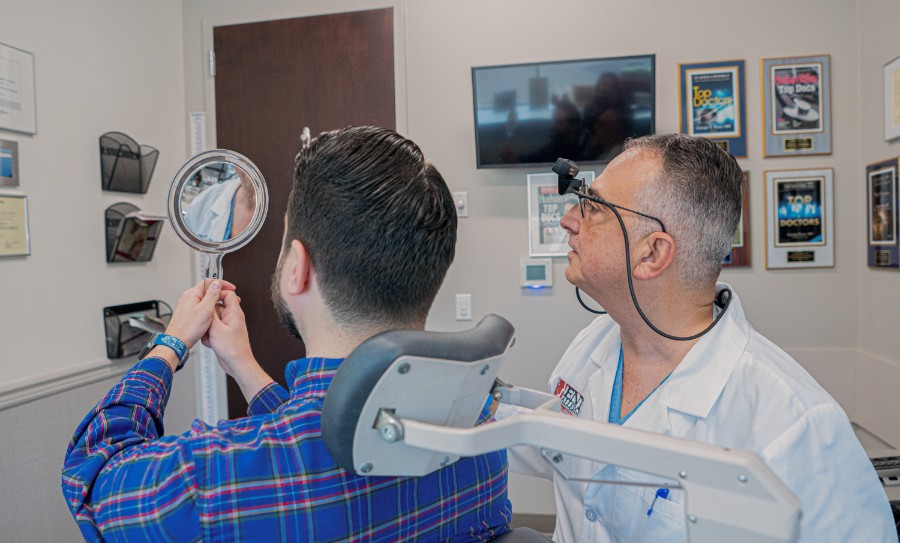
Rhinoplasty

Nose Jobs & Revision Rhinoplasty in NY or NJ

Description: Revision rhinoplasty(also known as secondary rhinoplasty) is a nose reconstruction operation performed to correct or revise an unsatisfactory outcome from a previous rhinoplasty.  These rhinoplasties are classified as aesthetic and functional (ability to breathe correctly). 


Background: With the continued explosion in growth of cosmetic surgery in the United States, rhinoplasty, often described as a “nose job” will continue to be a popular procedure. Currently, rhinoplasty is the most common plastic surgery procedure performed on men and the fourth most common plastic surgery procedure performed on women.  However, with revision rates ranging from 10-20%, there are a growing number of dissatisfied patients who have undergone prior rhinoplasty who will have cosmetic and/or functional complaints related to their rhinoplasty work.


There are a number of aesthetic concerns leading patient’s desire for revision rhinoplasty surgery.  A large portion of these aesthetic concerns can be corrected (see before and after rhinoplasty photos below). Another reason why rhinoplasty patients may desire a rhinoplasty revision surgery is because the functional ability to breathe out of their nose is diminished.  Breathing functions are related to the size and shape of the nose, and nasal obstruction frequently occurs in conjunction with aesthetically displeasing results.  Revision rhinoplasty is a very detailed and complex nose reconstruction procedure and best performed by a surgeon who specializes in Facial Plastic Surgery.


Our fellowship trainied physicians are experts in primary rhinoplasty and revision rhinoplasty.  We are especially experienced in the treatment of nasal obstruction from a variety of causes, including a deviated nasal septum, turbinate hypertrophy, chronic sinusitis, or collapse of the nasal valve due to previous rhinoplasty surgery. He uses the latest, advanced techniques in order to restore the aesthetic and functional features of the nose in revision rhinoplasties.


Revision Rhinoplasty


Revision Rhinoplasty


Revision Rhinoplasty


Revision Rhinoplasty


Revision Rhinoplasty


Rhinoplasty In New York City and NJ


Description: Surgery of the nose in which cartilage and bone are reshaped to produce a more aesthetically balanced nose that is in harmony with one’s facial features.

Preoperative and Postoperative Considerations

  • Computer Imaging
    • Being able to see what your face might look like after rhinoplasty can be very useful, and computer imaging makes this possible. Computer images help to ensure that you and your doctor are on the “same page” with respect to your goals of surgery. Computer imaging is not a guarantee of results, but a wonderful tool for demonstrating possible enhancements to the nose and face. Our facial plastic surgeons strives for a natural looking result that is aesthetically balanced with the rest of the face.
  • Form and Function
    • It is crucial to maintain the function of the nose after rhinoplasty. Our facial plastic surgeons specializes in the treatment of nasal obstruction from a variety of causes, including a deviated nasal septum, turbinate hypertrophy, chronic sinusitis, or collapse of the nasal valve due to previous rhinoplasty surgery.

Commonly asked questions before Surgery:

  • Where will my incisions be located?
    In over 95% of cases, all incisions will be hidden inside the nose. A select minority of patients may require a small incision underneath the nose on the columella. During your consultation, ask your ENT doctor for more information on which type of surgical approach you are more suited for.
  • What will I look like immediately after my rhinoplasty surgery?
    A small splint will be placed on the nose immediately after your rhinoplasty surgery and remain for one week, at which time the splint will be removed and the nose cleaned. There may be some bruising and swelling around the eyes, but there are several things that can help including medication and cool compresses.
  • Is there much pain involved with rhinoplasty or revision rhinoplasty surgeries?
    Usually there is a little discomfort with nasal surgery. Oral medication will be prescribed to help with any discomfort.
  • How long will my nose be swollen?
    Approximately 80% of the swelling is gone after two weeks; another 10% after two months. The tip of the nose may retain swelling longer and continued improvement in the tip can be seen over the next several months. There may be some temporary numbness of skin of the nose, which improves as swelling improves. Our New York and New Jersey rhinoplasty surgeons will be with you every step of the way, providing advice and support pre-to-post surgery.
  • When will I be able to return to my usual activities?
    Most patients can be seen in public in one week after the splint is removed. It is important to avoid strenuous activity for two weeks. At this time you can gradually work back to your usual exercise routine. Contact sports should be avoided for at least two months.
  • Will the surgery affect my breathing?
    Yes, it should improve it! Usually the nose will feel congested after the surgery, but after several weeks improvement should be noticeable, particularly if you had obstruction before your surgery.
  • Do I need a chin implant?
    Since rhinoplasty is about creating facial balance and harmony with the rest of the face, you may wish to consider chin augmentation at the time of rhinoplasty surgery. Ask your physician if you are a good candidate for chin augmentation during your consultation.
  • Will I need to have more surgery on my nose?
    The individual goals of nasal surgery can usually be obtained in one surgery. There are times when a "touch up" procedure needs to be performed. Noses that have been broken, crooked noses, and noses that have had previous surgery are generally more difficult to correct. These situations are more likely to require a revision procedure.
  • What are the risks?
    Bleeding, infection, unfavorable scarring, asymmetry and persistent nasal deformity are the most common risks of rhinoplasty surgery. These risks, as well as ways to avoid them, will be discussed during your consultation.

Photo Gallery (Before and After)

Rhinoplasty (Before and After)

Rhinoplasty-Before and After #1
Before and After

Rhinoplasty-Before and After #2
Before and After

Rhinoplasty-Before and After #6
Before and After

Rhinoplasty-Before and After #3
Before and After

Rhinoplasty-Before and After #4
Before and After

Rhinoplasty-Before and After #5
Before and After

Rhinoplasty-Before and After #6


Rhinoplasty and Chin Implant
(Before and After)

Rhinoplastyy and Chin Implant #1
Before and After

Rhinoplastyy and Chin Implant #2
Before and After


Rhinoplastyy and Chin Implant #3