Ringing, buzzing, or humming in your ears can make it difficult to relax, concentrate, or fall asleep. These sounds may come and go, remain in the background throughout the day, or become especially noticeable when your surroundings are quiet.
Tinnitus is the perception of sound without an outside sound source. It is a symptom rather than a disease, and it can affect adults and children. Some people experience mild, occasional ear noises. Others have persistent symptoms that interfere with communication, sleep, and daily activities.
At ENT & Allergy Associates (ENTA), our ENT physicians and audiologists work together to evaluate tinnitus, identify contributing conditions, and recommend care based on your hearing health and individual needs. Treatment may involve addressing an underlying ear problem, supporting hearing, or developing strategies to make tinnitus less disruptive.
With locations serving New York, New Jersey, Pennsylvania, and Texas, ENTA helps patients take the next step toward personalized care. If ear noises are recurring, worsening, or affecting your quality of life, schedule an appointment to discuss your symptoms.
What Is Tinnitus?
Tinnitus describes sounds you hear when there is no corresponding sound in your environment. Although people often call it “ringing in the ears,” tinnitus can also sound like buzzing, hissing, clicking, whistling, or roaring.
The sound may seem to come from one ear, both ears, or somewhere inside your head. Its pitch and loudness can vary, and it may be intermittent or continuous.
Tinnitus often occurs alongside changes in hearing. However, hearing loss is not the only possible contributor. Earwax blockage, middle ear problems, certain medications, injuries, and other medical conditions may also play a role.
The hearing system includes the ears, auditory nerves, and areas of the brain that process sound. Changes anywhere along this system can contribute to tinnitus. An evaluation helps determine if there is an identifiable condition to treat and which management options may be appropriate.
Tinnitus does not always indicate a serious health problem. Still, the pattern of your symptoms matters. Persistent noise in one ear, a sound that follows your heartbeat, or tinnitus accompanied by a sudden hearing change deserves medical attention.
Common Signs and Symptoms of Tinnitus
Tinnitus symptoms vary from person to person. You may hear a single tone, several overlapping sounds, or a noise that changes throughout the day.
Common descriptions include:
- Ringing or high-pitched tones
- Buzzing or humming
- Hissing or static-like noise
- Whistling or chirping
- Roaring
- Clicking
- Rhythmic whooshing or pulsing
Some people notice tinnitus mainly at bedtime because there is less background sound competing for their attention. Others find that it becomes distracting during conversations, work, or quiet activities.
Tinnitus may occur alongside muffled hearing, ear fullness, discomfort, or dizziness and vertigo. These additional symptoms can help your ENT doctor decide what to evaluate.
Persistent tinnitus may also affect sleep, concentration, and emotional well-being. Tell your provider how the sound affects you, even if it seems quiet or difficult to describe. The impact on your daily life helps guide treatment.
Because several ear conditions can produce overlapping symptoms, an examination is more useful than trying to identify the cause from the sound alone.
When Should You See a Tinnitus Specialist?
Schedule an evaluation if tinnitus keeps returning, persists, becomes more noticeable, or interferes with sleep, work, school, or communication. You do not need to wait for symptoms to become severe before asking for help.
An ENT physician can assess possible medical causes, while an audiologist evaluates hearing and helps guide hearing-related management.
Certain symptoms require more immediate attention:
- Sudden hearing loss with or without tinnitus: Seek medical care immediately, even if the hearing change feels like a blocked ear. Sudden sensorineural hearing loss is a medical emergency.
- A sound that follows your heartbeat: Arrange a prompt medical evaluation for pulsatile tinnitus.
- Persistent tinnitus in one ear: Make an appointment, particularly if hearing differs between ears.
- Tinnitus with new facial weakness, difficulty speaking, or other stroke-like symptoms: Seek emergency care.
For ongoing tinnitus, note when the sound started and any accompanying hearing changes, ear pain, drainage, or balance symptoms. This information helps your provider prioritize the appropriate evaluation.
What Causes Tinnitus?
Tinnitus can have several contributing factors. Sometimes an examination identifies a treatable cause. In other cases, no single explanation is found.
Hearing Changes and Loud Noise Exposure
Age-related hearing changes and noise exposure are common contributors. Loud machinery, firearms, concerts, and headphones played at high volumes can affect the hearing system.
Noise-induced hearing loss may develop gradually or follow a single intense sound exposure. Ringing after a loud event should be treated as a warning to protect your hearing.
Earwax, Infections, and Middle Ear Problems
An earwax blockage can affect hearing and contribute to tinnitus. Middle ear infections, fluid, and changes in the small bones of the middle ear may also cause ear noises.
Pressure problems associated with Eustachian tube dysfunction may occur with muffled hearing, popping, or fullness.
Medication-Related Effects
Certain medications can cause tinnitus or affect hearing, depending on the medication, dose, and individual risk factors. Examples include some antibiotics, chemotherapy medicines, diuretics, and high doses of certain pain relievers.
Tell your doctor about prescription medicines, over-the-counter products, and supplements. Do not stop or change a prescribed medication without speaking with the clinician who manages it.
Other Medical Conditions
Head or neck injuries, jaw joint problems, Ménière’s disease, and blood vessel conditions can contribute to tinnitus.
Less commonly, an underlying growth or another medical disorder may be involved. Your symptoms and examination determine which possibilities need further investigation.
Risk Factors for Tinnitus
A risk factor increases the likelihood of tinnitus but does not mean you will develop it. Your provider considers these factors alongside your symptoms and hearing test results.
Factors that may increase risk include:
- Repeated exposure to loud sound at work or during recreation
- Age-related hearing changes
- Existing hearing loss
- A history of head or neck injury
- Use of certain medications that can affect hearing
- Conditions affecting the ears, jaw, or circulation
Construction workers, musicians, military personnel, and others exposed to high sound levels may benefit from reviewing their hearing protection practices.
For patients with existing tinnitus, sleep difficulties and emotional distress can make symptoms harder to manage. Addressing these concerns can become part of a broader care plan.
Types of Tinnitus
Tinnitus can be described in several ways. These descriptions may overlap, and each gives your provider useful information.
Subjective Tinnitus
Subjective tinnitus is the most common form. Only the person experiencing it can hear the sound.
It may occur with hearing loss or other changes in the hearing system. Because the sound cannot usually be detected by someone else, your description and hearing evaluation are important parts of the assessment.
Objective Tinnitus
Objective tinnitus is uncommon. It involves an internal sound that a clinician may sometimes detect during an examination.
Certain blood vessel abnormalities or muscle contractions can produce these sounds. Identifying the source helps determine the next steps.
Pulsatile Tinnitus
Pulsatile tinnitus usually sounds like rhythmic beating or whooshing that follows your heartbeat. It describes the timing of the sound, rather than a completely separate category from subjective or objective tinnitus.
Because blood flow or structural conditions may contribute, pulsatile tinnitus warrants prompt evaluation.
Tinnitus That Changes With Movement
Some people notice that jaw clenching or movement of the head or neck changes their tinnitus. This pattern may suggest that the jaw or neck contributes to the symptoms.
Report these changes to your provider. They can help guide the examination, but they do not establish a diagnosis on their own.
Conditions Related to Tinnitus
Tinnitus may occur with other concerns that need attention during the same evaluation. Identifying these relationships helps your care team develop a more complete plan.
Related conditions include:
- Hearing loss: Hearing changes frequently accompany tinnitus. Testing can identify reduced hearing that may not be obvious during everyday activities.
- Ear infections: Infection or middle ear fluid may cause ear discomfort, muffled hearing, and tinnitus.
- Earwax buildup: Impacted wax can interfere with hearing. Professional evaluation helps determine if removal is needed.
- Ménière’s disease: This inner ear disorder can cause episodes of vertigo, fluctuating hearing, tinnitus, and ear fullness.
- Jaw joint problems: Jaw pain, clenching, or grinding may accompany tinnitus or affect how it sounds.
- Sleep and emotional concerns: Difficulty sleeping, anxiety, and distress may require additional support as part of tinnitus management.
Tell your provider about symptoms beyond the ear noise itself. Hearing changes, balance problems, jaw discomfort, and sleep disruption can influence the recommended care.
How Is Tinnitus Diagnosed?
A tinnitus evaluation combines your symptom history, an examination, and appropriate testing. The goal is to look for contributing conditions and understand how tinnitus affects your life.
Medical History and Physical Examination
Your ENT physician may ask when the sound began, how often it occurs, and if it affects one or both ears. They will also ask about its rhythm, your noise exposure, medications, previous ear problems, and any accompanying symptoms.
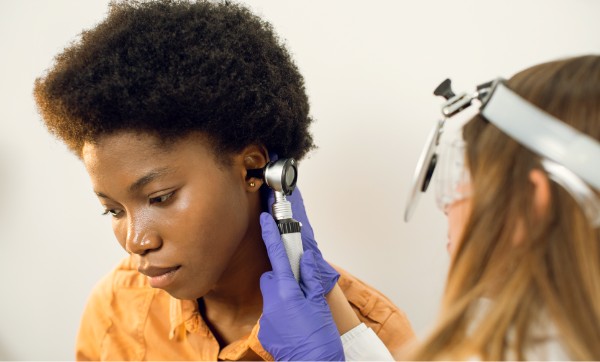
The examination generally includes the ear canals and eardrums. Depending on your symptoms, your doctor may also assess the head, neck, or jaw and look for signs of infection, blockage, or another medical concern.
Hearing and Middle Ear Testing
An audiologist may perform hearing tests to measure how well you hear different sounds and understand speech.
Additional testing may assess eardrum movement and middle ear function. Results can help identify hearing loss, differences between ears, or problems affecting sound transmission.
Your audiologist can also explain what your hearing test results mean and how they relate to your symptoms.
Imaging and Additional Evaluations
Imaging is not necessary for every patient. An ENT physician may recommend MRI, CT, or other testing for pulsatile tinnitus, persistent one-sided symptoms, unequal hearing, or concerning examination findings. Routine imaging is generally unnecessary for symmetrical, non-pulsatile tinnitus without other concerning signs.
If tinnitus occurs with significant dizziness or vertigo, vestibular testing may be considered to evaluate a separate balance concern.
Reviewing the Results
Your provider will explain the findings, any remaining questions, and the options available. A questionnaire may help document the impact on sleep, concentration, and daily activities and provide a baseline for follow-up.
Treatment Options for Tinnitus
Tinnitus treatment depends on the underlying findings, hearing status, symptom severity, and your goals. Some patients improve after a contributing condition is treated. Others benefit from ongoing management that reduces the sound’s impact.
Treating an Identifiable Cause
If your evaluation identifies an earwax blockage, infection, middle ear problem, or another treatable condition, your ENT physician may recommend care directed at that issue.
Treatment can include professional wax removal, management of an infection, or coordination with another clinician for a medication-related concern or jaw problem. Improvement varies, and treating a contributing condition does not always eliminate tinnitus.
Hearing Aids and Hearing Support
For patients with hearing loss, hearing aids can improve access to conversation and everyday sounds. They may also make tinnitus less noticeable.
An audiologist can assess your hearing needs and discuss appropriate devices. Hearing aid fitting and counseling help patients adjust to amplification and use their devices effectively.
Sound-Based Strategies
Soft background sound can reduce the contrast between tinnitus and a quiet room. Options may include a fan, gentle environmental sounds, quiet music, or an appropriate sound-generating device.
Sound should remain comfortable. Increasing volume excessively to cover tinnitus can put hearing at risk. Your audiologist can discuss a suitable approach and explain the limits of sound-based management.
Cognitive Behavioral Therapy and Counseling
Cognitive behavioral therapy, or CBT, helps patients change responses to tinnitus that contribute to distress. It can support coping, daily functioning, and quality of life even when the sound remains.
Clinical guidance recommends CBT for persistent, bothersome tinnitus. It also supports hearing aid evaluation when hearing loss is present and allows consideration of sound therapy.
Your care team can discuss appropriate referrals for counseling or additional mental health support.
Medications and Supplements
There is no FDA-approved medication specifically for tinnitus. Medication may be appropriate for a separate condition, such as depression or a sleep disorder, after an individualized assessment.
Sedatives and antidepressants should not be presented as routine tinnitus remedies. Supplements such as ginkgo biloba, zinc, and melatonin have not been established as effective tinnitus treatments. Discuss any product you are considering with your clinician.
Surgical Treatment
Surgery is not a standard treatment for most tinnitus. It may be considered for a specific underlying structural, vascular, or tumor-related condition.
A specialist will explain the reason for a proposed procedure, its risks, and realistic expectations. Tinnitus relief cannot be guaranteed.
Ongoing Management
Follow-up care allows your team to reassess symptoms, hearing, and treatment goals. Progress may mean sleeping better, communicating more comfortably, or paying less attention to tinnitus during everyday activities.
Pediatric Tinnitus Care
Children and adolescents can experience tinnitus, but they may describe it differently from adults. A child might report “a sound inside my ear,” buzzing at bedtime, or difficulty concentrating in a quiet classroom.
Parents and caregivers should listen without dismissing the concern. Ask the child to describe the sound in their own words and note when it occurs. Avoid assuming that trouble sleeping or paying attention is caused by tinnitus without an evaluation.
ENTA’s pediatric ENT services can help assess ear symptoms and determine if hearing testing or additional care is appropriate.
A pediatric evaluation may review ear infections, noise exposure, medications, hearing concerns, and the effect on sleep or school. Testing is selected according to the child’s age and ability to participate.
Care may involve treating an identified ear problem, explaining tinnitus in reassuring language, or supporting hearing and coping needs. When appropriate, the care team may coordinate with the child’s pediatrician or other professionals.
Tinnitus Care for Adults
Adult tinnitus care often considers several overlapping concerns, including hearing changes, occupational noise, medication use, and sleep disruption.
You may notice tinnitus during quiet work, after a noisy shift, or when trying to fall asleep. Some adults also have difficulty understanding speech and may need hearing support alongside tinnitus management.
An ENT doctor and audiologist can help separate the medical evaluation from the practical effects on your daily routine. Tell them which situations are most difficult and what you hope treatment will improve.
Protecting hearing remains part of ongoing care. Appropriate hearing protection, lower listening volumes, and breaks from loud environments can help reduce further noise exposure.
For persistent symptoms, a plan may combine hearing support, education, sound-based strategies, and referral for counseling.
What to Expect at Your Appointment
Preparing a few details before your visit can make the discussion more productive. Bring a medication list, previous hearing test results, and any relevant medical records.
Your appointment may include these steps:
- Discussing your symptoms: Explain when tinnitus started, where you hear it, and if it is constant, intermittent, or synchronized with your heartbeat.
- Reviewing your health history: Your provider will ask about hearing changes, noise exposure, ear conditions, injuries, medications, and other relevant concerns.
- Examining your ears: The ENT physician will check for wax, infection, fluid, or other visible abnormalities.
- Evaluating hearing: An audiologist may perform hearing testing at the appointment or a separate visit.
- Discussing findings and options: Your provider will explain available results and recommend treatment, monitoring, or additional testing.
- Planning follow-up: Further appointments may be recommended to review test results or assess your response to care.
Tell the office about sudden hearing loss when requesting an appointment so you can receive appropriate guidance.
Why Choose an Integrated ENT and Audiology Care Team?
Tinnitus often requires both medical evaluation and a detailed assessment of hearing. ENTA’s ENT services and audiology services address these complementary needs.
An ENT physician evaluates the ears and considers medical or structural causes. An audiologist assesses hearing and helps patients understand hearing support and tinnitus management options.
This coordinated approach can help connect examination findings with practical recommendations. If you have additional balance concerns, your providers can determine if a separate evaluation is needed.
Ongoing care also creates opportunities to review what is helping and adjust the plan. Your concerns about sleep, communication, work, or school should remain part of that discussion.
For patients managing bothersome tinnitus, clear explanations and realistic goals can make the next steps easier to follow.
Tinnitus Care in New York, New Jersey, Pennsylvania, and Texas
ENT & Allergy Associates serves patients across four states. Use our location resources to identify an appropriate office and confirm ENT, audiology, and tinnitus-related service availability.
Tinnitus Care in New York
Patients seeking a tinnitus specialist in New York can start with our New York locations. When scheduling, describe your symptoms and ask about coordinating an ENT evaluation with hearing testing.
Tinnitus Care in New Jersey
Our New Jersey locations provide a starting point for finding nearby care. Select an office offering the services needed for your ear and hearing concerns.
Tinnitus Care in Pennsylvania
Patients looking for a tinnitus doctor in Pennsylvania can visit our Pennsylvania care page to find an appropriate office. Confirm the available ENT and audiology services before scheduling.
Tinnitus Care in Texas
Patients seeking tinnitus care in Texas can use our Texas office information to identify nearby providers and scheduling options.
Across all four states, the location finder can help you take the next step toward an evaluation.
Frequently Asked Questions About Tinnitus
The following answers address common questions about ear noises, evaluation, and treatment.
What is tinnitus?
Tinnitus is the perception of sound without an external sound source. It may sound like ringing, buzzing, hissing, humming, or clicking and can affect one or both ears. The sound may come and go or remain present. Tinnitus is a symptom that can have several contributing causes.
What causes ringing in the ears?
Common contributors include hearing loss, loud noise exposure, earwax blockage, middle ear problems, and certain medications. Jaw problems, injuries, and other medical conditions can also play a role. An ENT examination and hearing evaluation help determine what may be contributing to your symptoms.
Can tinnitus go away on its own?
Some tinnitus improves or resolves over time, while other symptoms persist. Improvement may also follow treatment of an identifiable cause. Arrange an evaluation for recurring, persistent, or disruptive symptoms. A sudden hearing change requires immediate medical attention rather than waiting to see if it improves.
Does tinnitus mean I have hearing loss?
Tinnitus often occurs with hearing loss, but the two do not always occur together. Hearing changes can also be subtle enough that you have not noticed them. A hearing test helps identify your hearing status and determine if amplification or another hearing-related intervention may be useful.
Why is tinnitus louder at night?
Tinnitus may seem louder in a quiet bedroom because fewer outside sounds compete with it. A fan or another gentle background sound may make it less noticeable. If tinnitus regularly disrupts sleep, discuss the problem with your provider so sleep support can be included in your care plan.
Can stress make tinnitus worse?
Stress can make tinnitus more difficult to tolerate or draw more attention to the sound. Tinnitus itself may also create stress, especially when sleep is affected. Counseling and coping strategies may help reduce distress. This does not mean the sound is imaginary or that medical evaluation is unnecessary.
Do hearing aids help tinnitus?
Hearing aids may help people who have both tinnitus and hearing loss. By improving access to external sounds, they can make tinnitus less noticeable for some patients. An audiologist can determine if hearing aids are appropriate and explain the available features and realistic expectations.
Is there a cure for tinnitus?
There is no single treatment that cures all tinnitus. Symptoms may improve after an underlying cause is addressed, and persistent tinnitus can often be managed. Treatment goals may include reducing distress, improving sleep, supporting hearing, and making the sound less disruptive during everyday activities.
Can children have tinnitus?
Yes. Children may describe ringing, buzzing, or another sound inside their ears. They may need help explaining when it occurs and how it affects them. A pediatric ENT evaluation and age-appropriate hearing testing can assess possible causes and guide recommendations.
Which doctor treats tinnitus?
An ENT physician evaluates possible medical causes of tinnitus. An audiologist assesses hearing and provides hearing-related support. Depending on the findings, additional care may involve a mental health professional, dentist, or another specialist. Your ENT provider can help determine which professionals should be involved.
Is pulsatile tinnitus different from ordinary ringing?
Pulsatile tinnitus follows a rhythm, often matching your heartbeat, and may sound like beating or whooshing. This pattern can have different causes from steady ringing. Arrange a prompt medical evaluation so a clinician can determine if blood flow or another underlying condition needs investigation.
Where can I find a tinnitus specialist near me?
ENT & Allergy Associates serves patients in New York, New Jersey, Pennsylvania, and Texas. Use our location finder to identify a nearby office and confirm the services available. When scheduling, mention any hearing changes, one-sided symptoms, or heartbeat-like sounds.
Schedule an Appointment for Tinnitus Care
Persistent ear noises can affect your comfort, concentration, and sleep. A personalized evaluation can help you understand your symptoms and identify appropriate next steps.
At ENT & Allergy Associates, our ENT physicians and audiologists assess tinnitus, evaluate hearing, and recommend care based on your findings and priorities. Your plan may involve treating an underlying condition, supporting hearing, or developing strategies for ongoing symptom management.
We welcome patients seeking care in New York, New Jersey, Pennsylvania, and Texas. Find an appropriate office and discuss your symptoms with our team.
Schedule a tinnitus evaluation to get started.
Dedicated to Providing Convenient and Exceptional Care

Less Sick Days, More Living