by Andrew Blank, M.D., F.A.C.S.
Pediatric ear care helps diagnose and treat ear infections, fluid behind the eardrum, hearing changes, and other ear problems in infants, children, and teens. At ENT & Allergy Associates, an ear, nose, and throat doctor, also called an otolaryngologist, examines your child’s ears and recommends next steps. An audiologist can test your child’s hearing when symptoms, exam findings, or a screening suggest a concern.
Ear problems can show up differently at different ages. A baby might get fussy during feeds or sleep poorly when an ear hurts. A preschooler might ask you to repeat yourself after a cold, while an older child may describe an ear that feels plugged. Knowing when symptoms started and how they affect your child at home or school can help the care team decide what to check.
Our pediatric ENT team works with families to weigh options, from monitoring fluid to treating an infection or considering ear tubes. Contact an office in New York, New Jersey, Pennsylvania, or Texas to confirm pediatric appointment and testing availability.
What Is Pediatric Ear Care?
Pediatric ear care covers problems with the ear canal, eardrum, middle ear, and inner ear. An exam can help distinguish an active infection from lingering fluid, impacted wax, or another source of muffled hearing. An acute ear problem may develop over hours or days. Other concerns, such as recurring infections, can show a pattern over several months.
The ear canal carries sound to the eardrum. Behind the eardrum, small bones in the middle ear pass vibrations to the inner ear. The inner ear helps the body process sound and maintain balance. A blockage in the canal or fluid behind the eardrum can interfere with how sound travels. Other hearing changes can involve the inner ear or hearing nerve.
Your child’s pediatrician may refer you to an ENT specialist if infections keep coming back, fluid persists, or your child has ongoing pain or drainage. A referral to audiology may follow a newborn or school hearing screening or a concern about speech or hearing. Some children need both evaluations so the care team can identify what is affecting hearing and how to address it.
How Ear Problems Can Affect Children at Different Ages
Infants rely on sound as they learn to recognize voices and communicate. If a newborn does not pass a hearing screening, schedule a diagnostic hearing evaluation as soon as possible and by 3 months of age. An audiologist can assess hearing using tests that do not require the baby to respond on cue.
In toddlers and preschoolers, a hearing change may become apparent when a child misses parts of a conversation, watches faces closely, or has trouble following spoken directions. A hearing evaluation can help determine if reduced access to sound is contributing to speech or language concerns. A child may also benefit from a separate developmental or speech-language evaluation.
School-age children and teens may notice that one ear sounds different, that they struggle to hear in noisy classrooms, or that they turn up the volume on their devices. Teachers can add context about when a child has trouble hearing, such as during group work or when the teacher speaks from across the room. Share observations from home and school, including concerns that arise after a previous hearing screening.
Signs Your Child May Need an Ear Evaluation
Ear pain is often easy to recognize in a child who can describe it. Changes in sleep, listening, or behavior may be the first signs in younger children. Look for patterns and mention any symptoms that occur together.
- Ear discomfort or pressure. Your child may report pain, fullness, popping, or a blocked sensation. Babies and toddlers may rub an ear or become more irritable. Ear tugging alone has several possible explanations.
- Drainage or fever. Fluid or pus coming from the ear, especially with pain or fever, warrants a call to your child’s clinician.
- Changes in hearing. Your child may miss soft sounds, ask people to repeat themselves, turn one ear toward a speaker, or seem to hear better on some days than others.
- Speech or school concerns. A child may have trouble following instructions, hearing classmates, or developing speech and language skills as expected.
- Ringing or balance changes. Older children may describe ringing in the ear, dizziness, or unsteadiness. Tell the clinician if these symptoms occur with hearing changes, pain, or drainage.
Since ear pain, pressure, and muffled hearing can have several causes, an exam and, when appropriate, a hearing test can help clarify what’s happening.
When Should Your Child See an Ear Specialist?
Talk with your child’s pediatrician or an ENT specialist if infections recur, ear pain or drainage continues after treatment, or your child seems to have trouble hearing after a cold or ear infection. Ask about hearing testing promptly if your child does not pass a screening or you notice changes in listening, speech, or school participation.
For some mild middle ear infections, a clinician may recommend watching symptoms for two to three days after evaluating your child. Ask when to call back and what to watch for. Contact the clinician sooner if pain, fever, or other symptoms worsen during that period.
Get medical care right away if your child suddenly loses hearing in one or both ears or develops redness, tenderness, or swelling behind the ear, especially if the ear starts to stick out. These symptoms need prompt evaluation.
What Causes Ear Problems in Children?
Trouble Draining the Middle Ear
The eustachian tube connects the middle ear to the back of the nose and helps equalize pressure and drain fluid. Young children’s tubes are shorter and more horizontal than those of older children and adults. During a cold, swelling can make it harder for the tube to open, allowing fluid to collect behind the eardrum. This can cause pressure or muffled hearing. If germs infect the middle ear, pain and fever may follow. Ongoing pressure or trouble clearing fluid can be related to eustachian tube dysfunction.
Frequent Colds, Smoke Exposure, and Anatomy
Children in group child care may catch more colds, which can increase the chances of middle ear infections. Exposure to secondhand smoke can also raise the risk. Children with a cleft palate or certain other differences in anatomy may have trouble draining fluid from the middle ear. If your child keeps getting ear infections, bring the dates of recent episodes so the clinician can look for a pattern.
Moisture, Irritation, and Obstruction in the Ear Canal
Water trapped in the ear canal can contribute to an outer ear infection. Scratching or using cotton swabs can irritate the canal, and swabs can push wax farther inside. Impacted wax or an object in the canal can cause fullness, discomfort, or reduced hearing.
Hearing Differences Present at Birth or Developed Later
Some children are born with hearing loss related to genetics, differences in ear development, or certain infections during pregnancy. Hearing loss can also develop later. Bring any family history of childhood hearing loss and previous screening results to the appointment, especially if you notice a change since the last test.
Common Pediatric Ear Conditions We Evaluate
Several ear conditions can cause similar symptoms. The location of the problem helps determine which treatment may help.
Condition | Where it occurs | What a family may notice |
| Acute middle ear infection (otitis media) | Behind the eardrum | Ear pain, irritability, trouble sleeping, or fever, sometimes after a cold |
| Middle ear fluid (otitis media with effusion) | Behind the eardrum | Muffled hearing, fullness, or few noticeable symptoms. Fluid may remain after the infection clears. |
| Swimmer’s ear (otitis externa) | Ear canal | Itching, drainage, or pain when the outer ear is touched or moved |
| Impacted earwax | Ear canal | A blocked feeling, discomfort, or reduced hearing |
| Hearing loss | Outer ear, middle ear, inner ear, or hearing nerve | Difficulty hearing soft speech, following conversation in noise, or responding consistently to sound |
A child can have an ear condition and a related hearing change at the same time. For example, fluid behind the eardrum can cause conductive hearing loss by limiting how well sound travels through the middle ear. Comparing the ear exam with hearing test results helps the care team decide when to recheck hearing or investigate other causes.
Related Pediatric ENT Concerns
An ear visit can also bring up symptoms involving the nose, throat, or speech. Tell your child’s clinician about these concerns so they can recommend an evaluation or referral when appropriate.
- Ongoing nasal congestion or mouth breathing. The ENT may check for enlarged adenoids, which can contribute to nasal blockage and middle ear problems. Frequent sneezing or itchy eyes may also warrant evaluation for pediatric allergies.
- Snoring or breathing pauses during sleep. The pediatric ENT team can evaluate the tonsils and adenoids and discuss symptoms associated with obstructive sleep apnea.
- Speech or language delays. A hearing assessment can help determine how well a child hears speech. A speech-language pathologist can evaluate communication concerns and recommend support when appropriate.
- Persistent dizziness or unsteadiness. An ENT can evaluate dizziness and vertigo, especially when it occurs with hearing changes or other ear symptoms.
Our pediatric ENT services also cover concerns such as chronic sinus symptoms, hoarseness, airway or feeding issues, and head and neck cysts or swelling. Ask the office which provider handles your child’s main concern.
Evaluations and Diagnostic Services We Provide
Medical History and Ear Examination
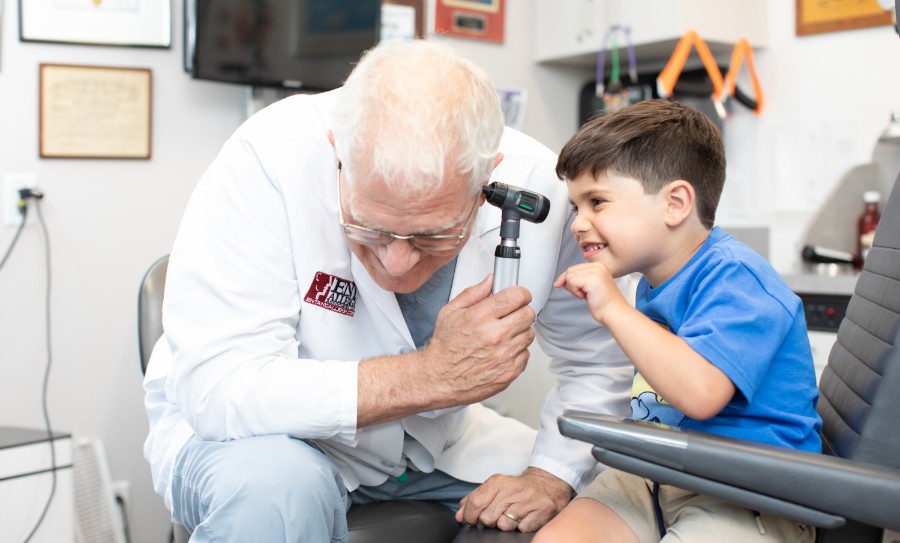
The clinician asks about your child’s symptoms, past infections, treatments, and any previous hearing tests or ear tubes. They use a lighted instrument called an otoscope to examine the ear canal and eardrum. When appropriate, they may check how the eardrum moves in response to a small change in air pressure. Limited movement can suggest middle ear fluid. If your child also has nasal blockage or mouth breathing, the exam may include the nose and throat.
Age-Appropriate Hearing Tests
The audiology team selects hearing tests based on your child’s age, development, and symptoms. Your child may have one or more of these tests.
- Tympanometry measures how the eardrum moves as air pressure changes. It helps assess the middle ear. A separate hearing test measures how well your child hears.
- Behavioral hearing testing measures responses to sounds. A younger child may turn toward a sound to see a toy light up, while a preschooler may drop a block into a bucket each time they hear a tone.
- Otoacoustic emissions (OAEs) use a small ear probe to record responses from the inner ear. Wax or middle ear fluid can affect the result, so the audiologist considers it alongside other findings.
- Auditory brainstem response (ABR) records how the hearing nerve and brainstem respond to sound. An audiologist may recommend it for infants or children who cannot give reliable responses during behavioral testing.
The team explains what the exam and tests show and how the findings affect your child’s care plan. For instance, a child with middle ear fluid may need repeat testing as it clears. A child whose hearing results suggest an inner ear problem may need further evaluation or a referral for hearing support.
Services and Treatments We Provide
Monitoring and Supportive Care
Some children with middle ear fluid feel well and improve as the fluid clears. If observation is appropriate, the clinician will explain when to return for an ear check and what changes should prompt an earlier visit. A hearing evaluation is generally recommended if fluid persists for three months or longer. Children with hearing concerns or an increased risk of speech, language, or learning difficulties may need assessment sooner.
Medications for Ear Infections
Treatment depends on the type of infection, your child’s age, and symptom severity. A clinician may recommend pain relief and observation for a mild middle ear infection or prescribe an oral antibiotic when indicated. Swimmer’s ear is typically treated with prescription ear drops. Middle ear fluid without an active infection generally does not need antibiotics.
In-Office Earwax Removal
If wax blocks the canal, affects hearing, or prevents the clinician from seeing the eardrum, they may recommend removing it. The method depends on the condition of the ear and what your child can tolerate. Tell the clinician if your child has ear tubes, a hole in the eardrum, or a history of ear surgery before using wax-softening drops.
Ear Tubes and Other Surgical Care
Ear tube surgery places a small tube through the eardrum to let air reach the middle ear. An ENT may recommend tubes when fluid has been present in both ears for at least three months and hearing difficulties are documented. Tubes may also be offered for recurrent middle ear infections when fluid is present at the visit to assess tube candidacy. The ENT will discuss expected benefits, risks such as drainage, and what follow-up involves.
Follow-Up and Hearing Support
Follow-up may include a recheck of the eardrum, an exam after tube placement, or another hearing test. If hearing loss persists, audiology can help families explore options such as hearing aids, early intervention referrals, or classroom support. Recommendations depend on the type and degree of hearing loss and your child’s communication needs.
What to Expect at Your Child’s Appointment
Bring any newborn or school hearing screening results, recent hearing tests, and a list of medications or ear drops your child has used. A short timeline of infections, including which ear was affected and how symptoms responded to treatment, can help the clinician understand what has changed.
- Talk through your concerns. Describe what you notice at home, during sleep, or at school. Mention changes since a recent illness and any similar concerns shared by a caregiver or teacher.
- Have your child’s ears examined. The ENT checks the ear canals and eardrums for problems such as wax, inflammation, fluid, or drainage.
- Discuss any testing. Based on the exam and your concerns, the clinician may recommend a hearing test at the visit or a separate audiology appointment.
- Review the care plan. The clinician explains what they found, which options fit your child, and when to return. Ask how you’ll receive results if testing is scheduled for another day.
How ENT and Audiology Work Together
An ENT physician evaluates the ear for medical or structural problems. An audiologist measures how well a child hears and helps assess the type and degree of hearing loss. Together, those findings can guide decisions about monitoring, treatment, or hearing support.
For a child whose hearing has changed after repeated infections, the ENT may check for fluid while the audiologist measures hearing in each ear. If fluid clears and hearing improves, follow-up may focus on watching for recurrence. If hearing difficulties continue, the team can recommend further testing or work with your child’s pediatrician to coordinate next steps. At each stage, families can share what they’re seeing at home and school and take part in decisions about care.
Pediatric Ear Care in New York, New Jersey, Pennsylvania, and Texas
ENT & Allergy Associates serves families across all four states. Ask your chosen office which clinicians see children of your child’s age and if hearing testing can be coordinated with the ENT visit.
New York
Browse New York offices to find a location near home or school. If your pediatrician has recommended both an ear exam and a hearing test, mention both when booking.
New Jersey
Use the New Jersey office directory to find a nearby location for a pediatric ear evaluation. If you’re scheduling follow-up after ear tubes, have the date of surgery and any recent test results handy.
Pennsylvania
Explore pediatric ENT care in Pennsylvania to see office options. Ask about pediatric audiology availability if your child is being referred after a hearing screening.
Texas
Visit the Houston-area locations page to find an office. When you contact the practice, share your child’s age and main concern so staff can help you book the appropriate visit.
Frequently Asked Questions About Pediatric Ear Care
What kind of doctor treats ear problems in children?
A pediatric ENT specialist, also called an otolaryngologist, evaluates and treats conditions involving the ear canal, eardrum, middle ear, and inner ear. An audiologist can measure hearing and recommend hearing support. Your child may see both when an ear problem affects hearing or when a hearing screening raises a concern.
What is the difference between an ear infection and fluid behind the eardrum?
An acute middle ear infection involves fluid behind the eardrum along with signs of infection and inflammation, such as a bulging eardrum and sudden ear pain. Fluid can also collect or linger without an active infection. It may cause muffled hearing or few symptoms. An ear exam helps tell the two apart.
Can an ear infection go away on its own?
Some mild middle ear infections improve without antibiotics. After examining your child, the clinician may recommend monitoring for two to three days with instructions for pain relief and follow-up. Age, symptoms, and exam findings help determine when an antibiotic is appropriate. Call if symptoms worsen or fail to improve as expected.
How long can fluid stay in a child’s ear after an infection?
Fluid can remain behind the eardrum for several weeks after an infection clears. If it persists for three months, a hearing evaluation is generally recommended. Contact your child’s clinician sooner if you notice muffled hearing, speech or language concerns, or difficulty following what people say at home or school.
When do children with recurring ear infections need ear tubes?
An ENT considers how often infections occur and checks for middle ear fluid at the evaluation. Tubes are an option for children with recurrent middle ear infections and fluid in one or both ears at that visit. The clinician also considers hearing, development, and the effects of infections on daily life.
Can a child have hearing trouble after passing a newborn screening?
Yes. Hearing can change after a newborn screening. If your child stops responding consistently to sound, needs frequent repetition, or has difficulty hearing in class, ask for a hearing evaluation. Share when you first noticed the change and any ear infections or other symptoms that occurred around the same time.
Can ear fluid contribute to speech or language difficulties?
Middle ear fluid can temporarily reduce how clearly a child hears speech. If reduced hearing persists, it may affect how much spoken language a child hears during daily activities. A hearing test can help find out if hearing is contributing to a speech concern and guide decisions about further evaluation.
Can I remove my child’s earwax at home?
Wipe away wax that reaches the outside of the ear with a soft cloth. Keep cotton swabs and other objects out of the ear canal. If wax seems to block hearing or cause discomfort, ask a clinician about removal. Check before using drops if your child has ear tubes, drainage, or a known eardrum opening.
Where can I find pediatric ear care near me?
ENT & Allergy Associates has offices in New York, New Jersey, Pennsylvania, and the Houston area of Texas. Use the location finder to explore offices, then confirm that your preferred office sees children of your child’s age and offers the type of visit or hearing test you need.
Schedule a Pediatric Ear Appointment
If ear infections keep returning, your child still hears poorly after an illness, or a hearing screening needs follow-up, ENT & Allergy Associates can help you take the next step. Our team can evaluate the ears, recommend hearing testing when appropriate, and talk through treatment and follow-up with your family.
Book a pediatric ENT appointment in New York, New Jersey, Pennsylvania, or Texas. When scheduling, mention any referral, recent ear treatment, or hearing screening result so the office can help arrange the right visit.
Dedicated to Providing Convenient and Exceptional Care

Less Sick Days, More Living