
by Sleep Division
Obstructive sleep apnea (OSA) occurs when the upper airway repeatedly becomes partially or completely blocked during sleep. These interruptions can disrupt restful sleep and reduce blood oxygen levels. Common signs include frequent snoring, witnessed pauses in breathing, waking up gasping, and excessive daytime sleepiness. A sleep evaluation and appropriate testing can help determine the cause and guide treatment.
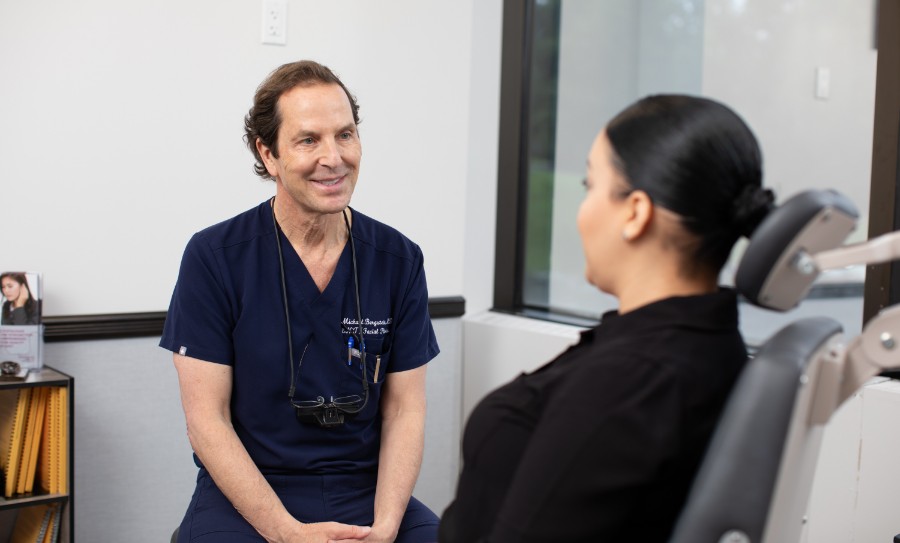
At ENT & Allergy Associates (ENTA), our sleep specialists evaluate sleep-related breathing concerns and develop individualized treatment plans. Our approach considers your symptoms, airway anatomy, medical history, and previous treatment experiences. Care may include positive airway pressure therapy, evaluation for an oral appliance, selected surgical treatments, or a combination of approaches.
ENTA serves patients in New York, New Jersey, Pennsylvania, and Texas. Our coordinated services connect sleep evaluations with ear, nose, and throat care and other relevant specialties when nasal obstruction, allergies, or enlarged tonsils contribute to breathing difficulties.
If you or your child snores regularly, experiences breathing pauses during sleep, or struggles with daytime alertness, an evaluation can help identify the next steps.
What Is Obstructive Sleep Apnea?
During sleep, the muscles supporting the tongue, soft palate, and throat relax. In someone with obstructive sleep apnea, the airway narrows or closes enough to interfere with breathing. A partial reduction in airflow is called a hypopnea, while a complete interruption is called an apnea.
The body may respond by briefly waking enough to reopen the airway. These awakenings can happen repeatedly without the person remembering them the next morning. As a result, someone may spend an adequate number of hours in bed but still wake feeling unrefreshed.
OSA differs from central sleep apnea, which involves problems with the signals controlling breathing. Identifying the type of sleep apnea matters because treatment recommendations can differ.
Obstructive sleep apnea can affect adults and children. It often requires ongoing management, with follow-up care to assess symptoms and treatment effectiveness. Changes in weight, health, or airway anatomy may affect its severity over time.
Snoring alone does not establish a diagnosis. A medical evaluation and sleep study help distinguish uncomplicated snoring from a breathing disorder that requires treatment.
Common Signs and Symptoms of Obstructive Sleep Apnea
Sleep apnea symptoms can appear during the night, in the morning, or throughout the day. A bed partner or caregiver may notice breathing changes before the person experiencing them recognizes a problem.
Common symptoms include:
- Loud, frequent snoring
- Witnessed pauses in breathing
- Gasping, choking, or snorting during sleep
- Repeated nighttime awakenings
- Waking with a dry mouth or sore throat
- Morning headaches
- Feeling unrefreshed after sleeping
- Excessive daytime sleepiness
- Difficulty concentrating, remembering information, or staying alert
- Irritability or changes in mood
- Waking frequently to urinate
Children may show a different pattern. Instead of obvious sleepiness, they may become unusually active, struggle with attention, or experience behavioral and school-related difficulties. Restless sleep, mouth breathing, bedwetting, and unusual sleeping positions may also warrant discussion with a clinician.
Symptoms can overlap with insufficient sleep, medication effects, and other sleep disorders. An evaluation helps determine what is contributing to the problem.
When Should You See a Sleep Apnea Specialist?
Schedule an appointment if you have recurring snoring with breathing pauses, nighttime gasping, or persistent daytime sleepiness. You do not need to wait until every symptom appears before seeking care.
An evaluation is especially appropriate when sleep problems interfere with work, school, relationships, or activities requiring sustained attention. A partner’s report that you stop breathing during sleep also deserves medical attention, even if you feel relatively well.
If you already have an OSA diagnosis, return for follow-up when symptoms persist, your treatment becomes difficult to use, or your health changes. Mask discomfort, nasal blockage, and pressure intolerance may be manageable with adjustments.
Untreated OSA is associated with high blood pressure, cardiovascular disease, stroke, and metabolic problems. Sleepiness can also increase the risk of motor vehicle accidents. These risks of untreated sleep apnea make timely assessment worthwhile.
If you feel sleepy while driving, stop driving and arrange another way to travel. Discuss significant daytime sleepiness promptly with your healthcare provider.
What Causes Obstructive Sleep Apnea?
OSA develops when the upper airway cannot remain sufficiently open during sleep. Several factors may contribute, and an individual may have more than one source of obstruction.
Airway Structure
The position and size of the tongue, soft palate, jaw, and surrounding tissues can affect available breathing space. A smaller jaw or a naturally narrow airway may increase the likelihood of obstruction when muscles relax.
In children, enlarged tonsils and adenoids are common contributors. Adults can also have enlarged tonsils or other anatomical features that affect airflow.
Weight-Related Changes
Excess tissue around the neck and upper airway can increase the tendency for the airway to narrow during sleep. However, people at a healthy weight can also develop OSA, so body size alone cannot rule it out.
Nasal Obstruction and Inflammation
Persistent nasal congestion, allergies, or structural blockage can make nighttime breathing less comfortable. These problems may also interfere with the use of a nasal PAP mask.
Nasal obstruction may contribute to sleep-related breathing difficulties, but it is not always the primary site of collapse.
Alcohol and Medication Effects
Alcohol and certain sedating medicines may worsen airway relaxation or sleep-related breathing problems. Your specialist will review these exposures and discuss any appropriate changes with the prescribing clinician.
Do not stop prescribed medicines without medical guidance.
Risk Factors for Obstructive Sleep Apnea
Risk factors help guide an evaluation, but they do not determine the diagnosis. OSA can occur in someone without an obvious risk profile.
Factors associated with increased risk include:
- Overweight or obesity
- A family history of sleep apnea
- Increasing age
- A narrow upper airway or certain jaw and facial features
- Enlarged tonsils or adenoids
- Persistent nasal obstruction
- Alcohol use, particularly near bedtime
- Smoking
- Certain medical conditions, including some hormonal and neuromuscular disorders
OSA is more common in men, while risk in women increases after menopause. Women may also report fatigue, headaches, or difficulty sleeping rather than the symptoms commonly associated with sleep apnea.
For children, conditions such as Down syndrome and differences in facial or skull development may increase risk. A specialist considers these factors alongside symptoms and examination findings.
Types and Severity of Sleep Apnea
A sleep study helps identify the breathing pattern involved and how frequently breathing disturbances occur.
Obstructive Sleep Apnea
OSA involves upper airway narrowing or collapse despite continued efforts to breathe. Treatment focuses on keeping the airway open or addressing factors that contribute to obstruction.
Central Sleep Apnea
Central sleep apnea involves interruptions in the brain’s signals to the breathing muscles. It requires a different evaluation and may be associated with certain medical conditions or medications.
Mixed or Treatment-Emergent Patterns
Some patients have both obstructive and central events. Others develop central events during treatment for OSA, which may require reassessment of their therapy.
How OSA Severity Is Measured
In adults, clinicians commonly use the apnea-hypopnea index (AHI), which measures breathing disturbances per hour of sleep.
Adult OSA category | Typical AHI range |
| Mild | 5 to fewer than 15 events per hour |
| Moderate | 15 to fewer than 30 events per hour |
| Severe | 30 or more events per hour |
These categories do not describe every aspect of the condition. Oxygen changes, daytime symptoms, and medical history also influence treatment decisions. Home tests may report a respiratory event index rather than an AHI, and children require different interpretation.
Conditions Related to Obstructive Sleep Apnea
Several conditions may coexist with OSA or produce overlapping symptoms. Your evaluation may include discussion of the following concerns:
- Snoring: Snoring can occur with or without OSA. Assessment of snoring and sleep disorders helps determine when testing is appropriate.
- Insomnia: Difficulty falling or staying asleep can coexist with sleep apnea. Persistent insomnia may need additional treatment.
- Allergies: Nasal inflammation may worsen congestion and PAP discomfort. Allergy, asthma, and immunology care may help address a contributing condition.
- Enlarged tonsils and adenoids: These tissues can reduce airway space, particularly in children.
- Cardiometabolic conditions: High blood pressure, heart disease, and diabetes may be part of the medical history considered during treatment planning.
Treating a related condition may improve comfort or support sleep apnea therapy. Follow-up testing may still be necessary to determine if OSA remains present.
How Is Obstructive Sleep Apnea Diagnosed?
Diagnosis begins with a clinical evaluation and usually requires objective sleep testing. Snoring recordings, questionnaires, and consumer sleep trackers may provide useful observations, but they cannot independently confirm or exclude OSA.
Medical History and Airway Examination
Your specialist will ask about sleep quality, breathing pauses, daytime alertness, medications, and existing medical conditions. Information from a bed partner or caregiver can help describe events you may not notice.
An ENT examination may assess the nose, mouth, tonsils, tongue, and throat. Additional airway examination may be recommended when it would help identify obstruction or guide treatment.
Home Sleep Apnea Testing
Home sleep testing may be appropriate for selected adults with symptoms suggesting moderate to severe OSA and without certain complicating medical conditions.
Depending on the device, testing records breathing-related signals, oxygen levels, heart rate, and other information. ENTA also provides information about WatchPAT home testing for OSA, which may be an option when clinically appropriate.
In-Laboratory Sleep Studies
An attended sleep study, called polysomnography, records a broader range of information, including sleep stages and breathing patterns. It may be recommended for children, patients with certain medical conditions, or people whose symptoms suggest another sleep disorder.
A negative, inconclusive, or technically inadequate home test does not reliably exclude OSA when clinical concern remains. An in-laboratory study is recommended in that situation.
Reviewing Your Results
Your clinician will explain the findings, including breathing-event frequency, oxygen changes, and the type of events detected. Treatment recommendations reflect these results together with symptoms, health risks, and personal preferences.
Treatment Options for Obstructive Sleep Apnea
OSA treatment depends on severity, airway anatomy, age, medical history, and response to previous care. The goal is to reduce breathing interruptions and improve sleep-related symptoms through a plan you can use consistently.
Positive Airway Pressure Therapy
Positive airway pressure (PAP) therapy uses pressurized air delivered through a mask to help keep the airway open during sleep.
Options include continuous positive airway pressure (CPAP), auto-adjusting PAP (APAP), and bilevel PAP (BPAP). The appropriate device and settings depend on clinical needs.
For some patients, CPAP or BiPAP titration studies help determine effective pressure settings.
Mask fit, humidification, pressure adjustments, and treatment of nasal symptoms can improve comfort. Discuss difficulties with your care team so they can help identify practical solutions.
Oral Appliance Therapy
A custom-fitted oral appliance can move the lower jaw forward to help maintain airway space. A sleep clinician may recommend this approach for selected patients, including some who cannot tolerate PAP.
Treatment generally involves coordination with a qualified dentist and follow-up assessment. An over-the-counter mouthguard is not equivalent to a prescribed sleep apnea appliance.
Lifestyle and Positional Approaches
Weight management, regular physical activity, limiting alcohol, and avoiding smoking may support treatment. Positional therapy may help selected patients whose OSA is substantially worse when sleeping on their back.
These approaches should be matched to sleep-study findings. Improvement in snoring or weight alone does not establish that OSA has resolved.
Medication for Eligible Adults With Obesity
Tirzepatide, marketed as Zepbound, is FDA-approved for moderate to severe OSA in adults with obesity, alongside a reduced-calorie diet and increased physical activity.
A qualified prescriber must assess eligibility, potential side effects, and contraindications. This option does not apply to every patient, and prescribed PAP should continue unless the treating clinician recommends a change.
Inspire Therapy
Inspire therapy is an implanted treatment that stimulates the nerve controlling tongue movement to help maintain an open airway during sleep.
It may be considered for selected patients with moderate to severe OSA who cannot use PAP effectively. Eligibility requires specialist assessment, review of sleep-study findings, and evaluation of airway anatomy.
Airway and Nasal Surgery
Surgical options depend on the location and cause of obstruction. They may include tonsil or adenoid removal, selected throat procedures, or other airway surgery.
When a deviated septum contributes to nasal blockage, septoplasty may improve nasal airflow or PAP tolerance. Nasal surgery alone does not reliably eliminate OSA.
Ongoing Management
Follow-up visits assess symptoms, treatment use, and remaining breathing disturbances. Repeat testing may be appropriate after an intervention or a substantial change in health.
Pediatric Obstructive Sleep Apnea Care
Children with OSA may experience restless sleep, mouth breathing, snoring, or pauses in breathing. During the day, symptoms may appear as hyperactivity, irritability, attention difficulties, or school-related concerns.
Untreated significant OSA can affect learning, behavior, and growth. These concerns deserve evaluation rather than being attributed solely to sleep habits.
ENTA’s pediatric ENT specialists assess airway concerns such as enlarged tonsils and adenoids. Care may involve coordination with the child’s pediatrician and a pediatric sleep specialist.
An attended sleep study is generally the standard diagnostic test for suspected pediatric OSA. Adult home-testing pathways and severity thresholds should not be applied automatically to children.
Treatment may include tonsil and adenoid surgery when these structures contribute to obstruction, PAP therapy, or management of relevant nasal inflammation. Weight-related care may also be appropriate for some children.
OSA can persist after treatment, especially when additional risk factors are present. Follow-up helps determine if further care is needed. Parents can explore more about sleep apnea treatment options for children before discussing an individualized plan with their child’s clinician.
Obstructive Sleep Apnea Care for Adults
Adult sleep apnea care should account for daily responsibilities and long-term health. Symptoms may affect concentration, mood, workplace performance, and driving safety, even when nighttime breathing problems are not obvious to the patient.
Your specialist will consider how treatment fits your sleep routine, work schedule, travel, and comfort needs. If you have already tried PAP, bring details about what made it difficult. Problems with leakage, dryness, nasal blockage, or pressure may call for different adjustments.
Patients considering an alternative treatment need an assessment of expected benefits, limitations, and follow-up requirements. A quieter night does not necessarily mean breathing events have stopped.
Continued coordination with your primary care clinician may also help address blood pressure, diabetes, weight-related concerns, and other relevant conditions.
What to Expect at Your Appointment
Your first visit focuses on understanding your symptoms and deciding what evaluation is appropriate. Testing may occur separately from the initial consultation.
The process generally includes:
- A discussion of sleep concerns. Describe snoring, breathing pauses, nighttime awakenings, morning symptoms, and daytime sleepiness.
- A review of your health history. Bring a medication list and information about relevant diagnoses or previous procedures.
- An airway examination. Your clinician will assess structures that may contribute to breathing difficulty.
- A testing plan. Your specialist will explain the recommended sleep study and how to complete it.
- A results visit. Once findings are available, you will discuss the diagnosis and treatment choices.
- Follow-up planning. Your care team will explain how treatment response will be monitored.
Bring previous sleep-study reports and information about any PAP device or oral appliance you use. A brief sleep diary and observations from a partner or caregiver may also help.
Why Choose an Integrated Care Team?
Sleep apnea can involve several overlapping concerns. A patient may need sleep testing, treatment adjustments, and evaluation of nasal or throat obstruction.
ENTA connects sleep services with ENT evaluation and relevant allergy care. This allows contributing airway problems to be considered alongside the sleep-study findings.
For example, someone struggling with a nasal PAP mask may benefit from assessment of congestion or structural blockage. A child with habitual snoring and enlarged tonsils may need pediatric ENT evaluation and coordinated sleep testing.
An integrated approach also supports discussion of medical and surgical options. Recommendations should reflect the source of obstruction, treatment history, and patient goals.
Specific services, procedures, and pediatric age ranges vary by physician and office. Your local team can help identify an appropriate appointment.
Sleep Apnea Care in New York, New Jersey, Pennsylvania, and Texas
ENTA serves patients across four states. Use the location directory to identify a nearby office and confirm the appropriate specialist, testing arrangements, and treatment availability.
New York
Explore ENTA’s New York locations for access to ENT and sleep-related evaluations. If you have previous testing or treatment records, ask how to submit them before your appointment.
New Jersey
ENTA’s New Jersey locations provide options for patients seeking evaluation of snoring and airway concerns. When scheduling, describe your symptoms and any existing sleep apnea diagnosis.
Pennsylvania
Patients in Pennsylvania can locate an office and discuss the appropriate care pathway. Confirm sleep-specific services and pediatric appointment availability with the selected practice.
Texas
Explore ENTA’s Texas locations for care options in the Houston area. The office can help confirm the right clinician for your sleep-related breathing concerns.
Frequently Asked Questions About Obstructive Sleep Apnea
What is the difference between snoring and sleep apnea?
Snoring is a sound caused by vibration of tissues as air moves through the upper airway. OSA involves repeated breathing reductions or interruptions, so snoring accompanied by gasping, witnessed pauses, or daytime sleepiness warrants evaluation.
Can you have sleep apnea without feeling tired?
Yes, some people with OSA do not recognize daytime sleepiness or describe their symptoms as fatigue, poor concentration, or unrefreshing sleep. A lack of obvious tiredness does not rule out the condition, particularly when someone observes breathing pauses.
Which doctor treats obstructive sleep apnea?
Sleep medicine physicians evaluate sleep-related breathing disorders, interpret testing, and guide treatment. ENT physicians assess upper airway anatomy and relevant surgical options, while dentists with appropriate training may provide prescribed oral appliance therapy.
Can a home sleep test diagnose OSA?
A physician-ordered home test can diagnose OSA in selected adults when the test is appropriate and produces adequate information. Some patients need an attended laboratory study because of their age, medical history, symptoms, or an inconclusive home result.
Is CPAP the only treatment for sleep apnea?
PAP therapy is a common treatment, but other options may include custom oral appliances, positional approaches, weight-related treatment, or selected procedures. Your specialist will explain which choices fit your diagnosis and how their effectiveness should be assessed.
Can allergies cause obstructive sleep apnea?
Allergies can cause nasal inflammation and congestion that contribute to breathing discomfort or difficulty tolerating PAP. OSA usually requires evaluation of additional factors, so treating allergies alone may not resolve sleep-related airway obstruction.
Can sleep apnea go away after weight loss?
Weight loss may reduce OSA severity in some patients, but the condition can persist because of airway anatomy or other contributing factors. Continue prescribed treatment until your clinician reassesses your condition and determines if changes are appropriate.
Can children still have OSA after tonsil and adenoid surgery?
Yes, some children have persistent OSA after surgery, particularly when other airway or medical factors are involved. Follow-up evaluation, and sometimes repeat sleep testing, helps determine if additional treatment is needed.
Does sleep apnea treatment require surgery?
Many patients manage OSA with nonsurgical treatments, including PAP or a prescribed oral appliance. Surgery may be considered when anatomy, treatment response, and individual circumstances support a procedural approach.
Where can I find sleep apnea care near me?
ENT & Allergy Associates serves patients in New York, New Jersey, Pennsylvania, and Texas. Use the location finder to identify a nearby office and confirm the appropriate specialist and available sleep services.
Schedule an Appointment for Obstructive Sleep Apnea
Frequent snoring, witnessed breathing pauses, and persistent daytime sleepiness deserve a closer look. An evaluation can help determine if obstructive sleep apnea or another condition is disrupting your rest.
ENT & Allergy Associates provides assessment of sleep-related breathing concerns and individualized treatment planning. From reviewing symptoms and arranging appropriate testing to discussing treatment and follow-up, our team can help you understand your options.
If an existing treatment is uncomfortable or difficult to use, bring those concerns to your appointment. Reviewing the source of the problem may reveal adjustments or alternatives worth considering.
Book an appointment with ENT & Allergy Associates or find a nearby office in New York, New Jersey, Pennsylvania, or Texas.
Dedicated to Providing Convenient and Exceptional Care

Less Sick Days, More Living