by Tahl Colen, M.D.
Swimmer’s ear is an infection of the outer ear canal, the passage that runs from the visible part of the ear to the eardrum. It commonly causes ear pain, itching, drainage, or muffled hearing. A common sign is pain when you gently tug the outer ear or press the small flap of cartilage in front of the ear canal. Adults and children can develop swimmer’s ear after swimming or showering, or after irritating the canal with a cotton swab or another object.
An ear, nose, and throat (ENT) specialist can examine the canal and eardrum, identify the cause of your symptoms, and recommend treatment. Prescription ear drops are usually the first treatment for uncomplicated swimmer’s ear. If swelling or debris blocks the canal, the specialist may clean it or place a small wick to help the medicine reach the affected skin.
ENT & Allergy Associates evaluates children and adults with new ear pain, repeat infections, and ongoing ear canal itching in New York, New Jersey, Pennsylvania, and Texas. If hearing stays muffled after the canal heals, your ENT specialist can help determine if a hearing test or an audiology evaluation is appropriate.
What Is Swimmer’s Ear?
Swimmer’s ear is the common name for acute otitis externa, a sudden inflammation of the outer ear canal that is usually caused by bacteria. The canal is lined with delicate skin. Trapped moisture can encourage bacterial growth, and irritation can damage the skin that protects the canal. Fungi can also cause an outer ear infection.
A swollen canal can feel plugged or make sounds seem faint. Drainage and debris can add to that blocked sensation. The skin may also become so tender that sleeping on the affected side, wearing an earbud, or putting in a hearing aid becomes uncomfortable.
Otitis externa is a broader term that includes longer-term canal inflammation. People with chronic otitis externa may notice dry, flaky skin and a recurring urge to scratch. Some people have separate infections that clear and then return, sometimes after repeated water exposure. Tell your specialist if itching persists between episodes or if symptoms clear completely. That pattern can help guide treatment and prevention.
Signs and Symptoms of Swimmer’s Ear
Itching or mild irritation can be an early sign. As inflammation increases, the outer ear often becomes more sensitive to touch. Symptoms can include:
- Ear pain or tenderness. Moving the outer ear or pressing the tragus, the small flap at the canal opening, can make the pain worse.
- Itching inside the ear. Persistent itching or flaking between painful episodes can point to an underlying skin problem.
- Redness or swelling. The canal opening may look irritated. Swelling deeper in the canal can make the ear feel full.
- Fluid draining from the ear. Drainage can occur when the canal is inflamed. An exam helps identify where the fluid is coming from.
- Muffled hearing. Swelling, fluid, or debris can partly block sound from reaching the eardrum.
Young children may rub the ear, resist having it touched, or seem unusually uncomfortable when lying on that side. Earwax buildup, a middle ear infection, and other ear conditions can cause some of the same symptoms. An exam can help pinpoint the cause.
When Should You See an ENT Specialist?
Contact a healthcare professional if you develop ear pain or drainage. An ENT visit is especially useful if symptoms keep returning, itching continues between infections, or pain and swelling make it difficult to sleep, hear, or wear a hearing aid. If you’re already using prescribed drops and symptoms have shown no improvement after 48 to 72 hours, contact the clinician who prescribed them for a reassessment.
Seek prompt care for severe or worsening pain, fever with ear symptoms, or redness or swelling spreading beyond the canal. If you have diabetes or a weakened immune system, seek prompt evaluation for ear pain or drainage because an outer ear infection can be more serious. A sudden drop in hearing also needs urgent medical evaluation, even if the ear feels plugged. New facial weakness needs emergency evaluation.
What Causes Swimmer’s Ear?
Several factors can make the canal more vulnerable to inflammation or infection. A history of water exposure is helpful, and the exam can also uncover irritation or skin changes that keep symptoms coming back.
Water and Moisture in the Ear Canal
Water can remain in the canal after swimming, bathing, or showering. Prolonged moisture makes it easier for bacteria to grow. Frequent swimmers may notice symptoms during stretches of regular pool use, while some people develop them after everyday bathing.
Scratches and Irritation
Cotton swabs, fingernails, and other objects can scrape the skin and remove protective earwax. Earbuds, earplugs, or hearing aids can also irritate sensitive skin, particularly if they rub against the canal. If symptoms tend to start after using a device, tell your specialist how often you wear it and where you feel irritation.
Eczema and Other Skin Conditions
Eczema and seborrheic dermatitis can affect the ear canal and cause itching or flaking. Scratching may bring brief relief, then leave the skin more irritated and vulnerable to infection. The itch-scratch cycle is especially relevant when you have symptoms between infections or when repeated courses of drops provide only temporary relief.
Types of Otitis Externa
The pattern of symptoms helps your ENT specialist distinguish a short-term infection from ongoing skin inflammation or a fungal infection.
Type | Typical pattern | What the specialist evaluates |
| Acute bacterial otitis externa | Ear pain and tenderness develop quickly, sometimes with swelling, drainage, or muffled hearing. | How swollen the canal is, the condition of the eardrum, and how well drops can reach the affected skin. |
| Fungal otitis externa | Itching, a plugged feeling, or drainage may be prominent. Symptoms can overlap with a bacterial infection. | The appearance of the canal and debris, and if cleaning or antifungal treatment is appropriate. |
| Chronic otitis externa | Itching, flaking, or irritation persists or repeatedly flares. A secondary infection can cause new pain or drainage. | Skin conditions, scratching, or other irritants that may be sustaining the inflammation. |
A change in symptoms can also help guide the evaluation. For example, if an ear that usually feels dry and itchy becomes painful and starts draining, the specialist can check for an infection alongside the ongoing skin irritation.
Swimmer’s Ear vs. a Middle Ear Infection
Swimmer’s ear affects the canal in front of the eardrum. A middle ear infection, also called otitis media, develops behind it and can follow a cold. Both can cause pain, drainage, or temporary hearing changes. The differences below can help you describe your symptoms at an appointment.
Feature | Swimmer’s ear | Middle ear infection |
| Where it occurs | In the outer ear canal | Behind the eardrum |
| Common clues | Tenderness when the outer ear moves, itching, or recent water exposure | Deep ear pain or pressure, sometimes after a cold |
| What the exam may show | A swollen, red canal, sometimes with debris or drainage | Fluid behind the eardrum or an eardrum that bulges with an acute infection |
Earwax buildup can also cause fullness or muffled hearing and may make the eardrum hard to see. A perforated eardrum or an ear tube can allow fluid from the middle ear to drain into the canal. The source of the drainage matters because it helps determine which treatments are safe.
How Is Swimmer’s Ear Diagnosed?
Medical History and Ear Examination
Your specialist will ask when the pain, itching, drainage, or hearing change began. They may ask about swimming, recent colds, past infections, skin conditions, and products or devices that go in your ears. Tell them if you have ear tubes, a hole in the eardrum, previous ear surgery, diabetes, or a condition that weakens your immune system. Bring the name of any ear drops you’ve tried, including over-the-counter products.
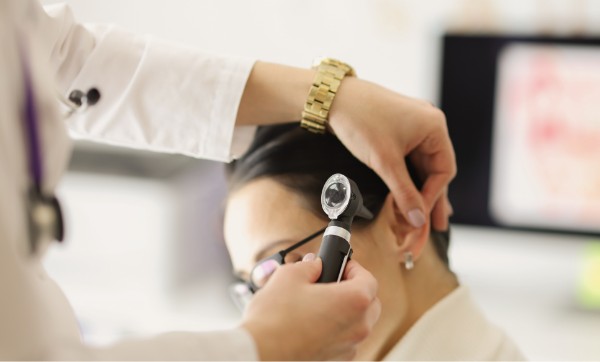
The specialist looks at the outer ear and uses a lighted instrument to examine the canal. They check for redness, swelling, debris, and discharge. If the eardrum is visible, they also look for signs of middle ear fluid, a perforation, or a tube. If debris blocks the view, the specialist may remove it when appropriate.
When Additional Testing Helps
Most straightforward cases can be diagnosed during the exam. A clinician may collect a sample of drainage if symptoms are persistent, keep returning, or have responded poorly to initial treatment. The results can help identify bacteria or fungi and guide the next treatment.
Swelling and debris can make hearing temporarily muffled. If hearing difficulties continue after the canal clears, the specialist may recommend hearing tests to look for another cause. Tell your provider immediately if the hearing change came on suddenly.
Swimmer’s Ear Treatment
Treatment depends on the cause, how swollen the canal is, and the condition of the eardrum. Your specialist can also recommend ways to manage pain while the ear heals.
Prescription Ear Drops
Antibiotic ear drops are a common first treatment for uncomplicated bacterial otitis externa. Some also contain a corticosteroid to help reduce swelling and inflammation. A fungal infection may need an antifungal medicine and careful cleaning. If you have an ear tube or a known or suspected hole in the eardrum, the clinician will choose a medication that is safe for that situation.
Use the drops for the length of time prescribed. Your care team can show you how to position the ear so the medicine flows into the canal. Oral antibiotics may be considered if the infection spreads outside the canal or if specific health risks change the treatment plan.
Professional Cleaning and an Ear Wick
Drainage and debris can make it difficult for drops to reach the skin. An ENT specialist may gently clear the canal using instruments or suction under direct visualization. If swelling has narrowed the canal, the specialist may place a small wick that carries the medicine farther into the ear. If you receive a wick, follow your clinician’s instructions for using the drops and returning for follow-up or removal.
Keeping the Ear Dry During Recovery
Follow your clinician’s instructions for bathing, swimming, and using hearing aids or earbuds while the ear heals. Keep water out of the affected ear and avoid putting cotton swabs or other objects in the canal. Ask which pain reliever is appropriate for you or your child. Contact your clinician if pain or drainage worsens or if the ear has shown no improvement after 48 to 72 hours of treatment.
Managing Chronic Itching and Repeat Infections
When eczema or seborrheic dermatitis is involved, the specialist may recommend a prescribed anti-inflammatory drop or cream to calm the skin. A secondary bacterial or fungal infection may need separate treatment. Your follow-up plan may also address triggers, such as scratching, repeated water exposure, or an earpiece that rubs. Treating the underlying skin irritation can make it easier to break the itch-scratch cycle.
How to Prevent Swimmer’s Ear
If your family spends a lot of time in the pool, preventing swimmer’s ear can start with a simple routine after every swim. The same precautions can help after a bath or shower.
- Dry the outer ear gently. Tip your head so each ear faces down and let water drain. Use a towel to dry the visible outer ear.
- Leave earwax in place. It helps protect the canal. Keep cotton swabs, fingers, and other objects away from the inside of the ear.
- Ask about swim protection. A swim cap, well-fitting earplugs, or custom swim molds can help keep water out. If plugs irritate the canal, discuss a different fit or option.
- Check before using ear-drying drops. Ask your clinician if preventive drying drops are appropriate for you or your child. Avoid them if you have ear tubes, a perforated eardrum, an active outer ear infection, or ear drainage.
Swimmer’s Ear in Children
One clue to swimmer’s ear in children is pain when the outer ear is touched. A child may say their ear feels plugged or pull away when you dry it after a bath. A child who has trouble explaining the sensation may rub the ear or have trouble settling at bedtime. If symptoms start during swim lessons or summer camp, mention that timing along with any history of eczema, ear tubes, or recent middle ear infections.
An exam can help determine the source of the symptoms and which drops are appropriate. If a child has an ear tube, fluid from the middle ear can drain into the canal. Checking both the canal and the eardrum helps the clinician identify the source. Caregivers can ask the specialist to demonstrate how to give the drops and explain when the child can return to swimming.
ENTA’s pediatric ENT specialists evaluate children with new or recurring symptoms. If ear pain, drainage, or hearing changes continue, the specialist can check for other pediatric ear conditions that may cause similar symptoms.
What to Expect at Your Appointment
Bring a list of ear drops you’ve used and, if applicable, the date of ear tube placement or prior ear surgery. Think about when you last noticed normal hearing and if symptoms have returned after similar activities.
- Describe your symptoms. Explain what started first, what makes the ear feel worse, and how the symptoms affect sleep, hearing, or daily activities.
- Have the ear examined. The specialist checks the outer ear, canal, and eardrum as visibility allows. If swelling or debris blocks the canal, they will determine which in-office measures may help.
- Review the findings. Ask what is causing the symptoms, how to use any prescribed drops, and what changes to watch for as the ear heals.
- Plan follow-up as needed. Your clinician may want to recheck the canal, remove a wick, review a culture result, or evaluate hearing that remains muffled.
Coordinated ENT and Audiology Care
ENTA’s ear, nose, and throat specialists can assess canal infections, manage chronic irritation, and check for middle ear problems that may cause similar symptoms. If hearing remains affected after treatment, audiology can help measure the change and guide next steps. People who wear hearing aids can also ask about fit and when it’s appropriate to start wearing a device again.
Swimmer’s Ear Care in New York, New Jersey, Pennsylvania, and Texas
ENT & Allergy Associates evaluates children and adults with suspected swimmer’s ear, recurring outer ear infections, and persistent ear canal itching. At your visit, an ENT specialist can check the canal and eardrum, recommend treatment, and explain how to care for the ear while it heals. When scheduling, let the office know if you or your child has ear tubes, has already started treatment, or has noticed a change in hearing.
Swimmer’s Ear Care in New York
If ear pain or drainage develops after swimming, bathing, or using an earbud, contact one of our ENT offices in New York to schedule an evaluation. Tell the office when the symptoms started and if touching the outside of the ear makes the pain worse.
Swimmer’s Ear Care in New Jersey
If itching or irritation returns after treatment, our New Jersey ENT offices can help you schedule a follow-up. Bring the name of any drops you used and tell your specialist if the symptoms cleared completely or continued between flare-ups.
Swimmer’s Ear Care in Pennsylvania
Families can contact ENT & Allergy Associates of Pennsylvania to arrange an adult or pediatric ENT visit. If you’re scheduling for a child with ear drainage, mention any ear tubes or recent ear infections so the specialist can consider that history during the exam.
Swimmer’s Ear Care in Texas
Patients seeking ENT care in the Houston area can contact a nearby practice for an outer ear evaluation. If your hearing still sounds muffled after treatment, mention it when scheduling so the office can help you arrange the appropriate follow-up.
Frequently Asked Questions About Swimmer’s Ear
Can you get swimmer’s ear without swimming?
Yes. Water left in the ear after a shower or bath can contribute to swimmer’s ear. Scratching the canal or using cotton swabs can also damage the skin and increase the chance of infection. People with eczema or ongoing canal irritation may develop symptoms without any recent water exposure.
Is swimmer’s ear contagious?
Swimmer’s ear does not spread from person to person. The infection develops in the outer ear canal, often after water remains in the ear or the skin becomes irritated. If several family members develop ear symptoms after swimming, each person with pain or drainage should contact a healthcare professional for advice.
How long does swimmer’s ear last?
Many people start feeling better within 48 to 72 hours of beginning appropriate treatment, with substantial improvement within about a week. Follow the prescribed course even if pain improves early. If you see no improvement within two to three days or symptoms worsen, contact the clinician who treated you.
Can swimmer’s ear go away on its own?
A brief itch after getting water in your ear may settle as the ear dries. If you have ear pain, drainage, or increasing tenderness, contact a clinician to find out what is causing the symptoms. A confirmed outer ear infection often needs prescription drops, and the exam helps determine which drops are safe.
Can swimmer’s ear cause hearing loss?
Swelling, fluid, and debris can block sound and make hearing seem muffled. This often improves as the canal heals. If muffled hearing continues after treatment, ask about a follow-up exam and possible hearing testing. A sudden drop in hearing needs urgent evaluation, even if the ear also feels full.
Can I swim while being treated for swimmer’s ear?
Keep the affected ear dry and ask your clinician when to return to swimming. The timing depends on how severe the infection is and how the ear responds to treatment. Ask about precautions for showering and washing your hair, especially if you have an ear wick, ear tubes, or a perforated eardrum.
Why do I keep getting swimmer’s ear?
Frequent water exposure, scratching, and skin conditions such as eczema can make the canal more prone to irritation and repeat infections. An ENT specialist can look for a pattern, identify factors that may be contributing, and recommend ways to protect the ear based on your skin, ear devices, and activities.
What kind of doctor treats swimmer’s ear?
A primary care clinician, pediatrician, or ENT specialist can evaluate and treat swimmer’s ear. An ENT specialist can help when swelling or debris blocks the canal, symptoms return after treatment, or it is unclear where drainage is coming from. ENTA also has a patient guide to otitis externa that covers symptoms and treatment options.
Schedule an Appointment for Swimmer’s Ear
If ear pain, drainage, or itching is interfering with sleep, swimming, or everyday activities, ENT & Allergy Associates can examine the ear and recommend treatment based on the cause. Our specialists see children and adults with new symptoms, repeat infections, persistent canal irritation, and hearing changes that continue after treatment.
Find an ENT & Allergy Associates location in New York, New Jersey, Pennsylvania, or Texas to request an appointment with a nearby practice.
Dedicated to Providing Convenient and Exceptional Care

Less Sick Days, More Living